
ICC Reparations Hearing and the Long-Awaited Recognition of Darfur’s Victims

On the 8th September 2026, Rights for Peace made submissions on reparations for victims before the ICC Trial Chamber in the case of Ali Abd-Al-Rahman (also known as Ali Kushayb). The Chamber convened this hearing to gather information about how thousands of victims of Ali Kushayb, a senior Janjaweed commander, should receive reparation. The hearing marks a significant step towards the pursuit of justice for victims of atrocities committed in Darfur over 20 years ago.
Ali Kushayb, a senior Janjaweed commander, was found guilty by the International Criminal Court on 6 October 2025 and was sentenced to 20 years’ imprisonment on 9 December 2025. For further information on the Ali-Kushayb case, click to view our infocards and mapping of the trial.
While the case is on appeal, the reparations phase is underway: it is not about guilt or punishment, but about redressing the harm done. Under the Rome Statute, victims of crimes have the right to seek reparations—restitution, compensation, rehabilitation—and the Court may order these to be paid through the Trust Fund for Victims
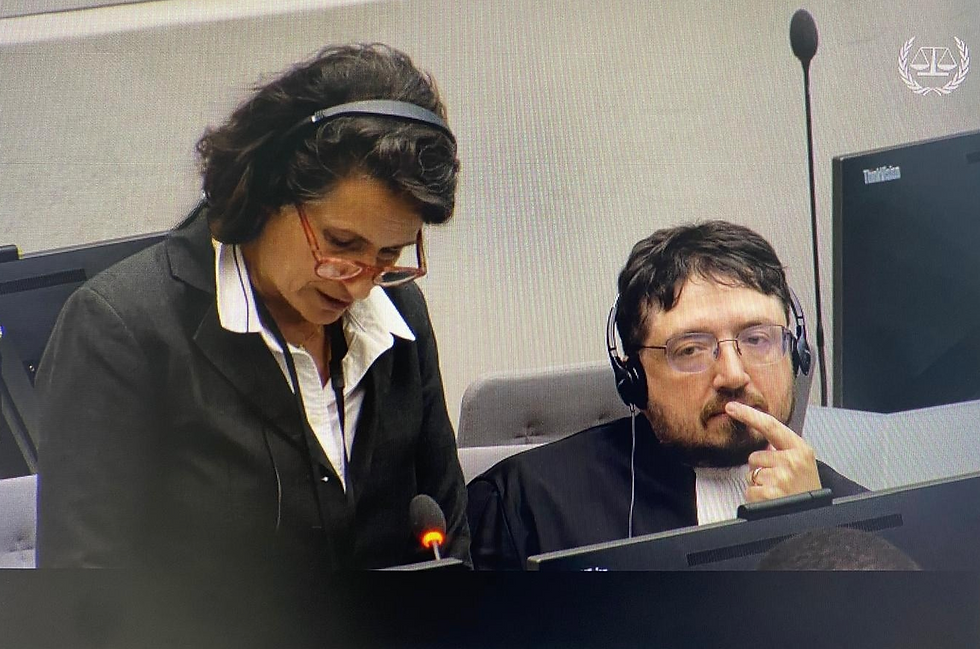
At the hearing, the Chamber considered various submissions from the Common Legal Representatives of Victims, the Prosecution, the Trust Fund for Victims, the Registry and Amici Curiae including the General Coordination Council (of IDP camps), GLAN et al., REDRESS, Rights for Peace, et al., and i-ACT, and the Defence.
Rights for Peace worked with victims in six locations inside and outside Sudan, facilitating 2-day Focus Group Discussions in each of the six locations, involving 121 direct victims. In partnership with REDRESS, Darfur Women Action Group Uganda, Darfur Network for Human Rights and Queen’s University Belfast Human Rights Centre, victims' views were crafted into an amicus submission filed with the ICC in June 2026.
Our submissions focused key issues requested by the Chamber:
The types and extent of harm:
The Chamber's order on reparation will aim to repair the specific harm suffered as a result of the crimes that Ali Kushayb (Al Rahmen) was convicted of. The crimes include 27 counts of crimes against humanity and war crimes, including persecution, murder, rape, torture, and pillaging, committed in Darfur between August 2003 and April 2004. While Kushayb was not charged with or convicted of deportation or forcible transfer as a standalone count, the Chamber found that his campaign of persecution and violence—including attacks on villages, killings, and destruction of property—was part of a broader pattern that resulted in the forced displacement of the Fur population.
Of the 121 victims who participated in Focus Group Discussions, 99% were displaced and lost their fertile ancestral lands and homes, leaving them displaced, scattered and destitute, destroying the social fabric and inflicting transgenerational harm on the Fur communities in the targeted locations.
Restitution of land was discussed at length at the hearing. On behalf of the victims, we requested declarations affirming victims’ rights to ancestral land, and support for complementary measures—such as documenting historic land rights—to facilitate future restitution.
Factual Presumptions:
The amicus filing argues that the Chamber should adopt both established and new factual presumptions to address the large-scale, discriminatory, and transgenerational harms suffered by victims, including presumptions of victimhood for Fur residents in targeted areas and presumptions of moral, physical, material, collective, and transgenerational harm for those affected by the crimes, particularly due to the murder of community leaders, forced displacement from ancestral lands, and the systematic nature of the attacks.
These presumptions are necessary as they will reduce burdensome evidence to establish who is eligible for the reparation measures.
Types and modalities of reparation:
Victims expressed interest in different types of reparations including monetary, symbolic, land restitution and rehabilitation measures. In terms of modalities, the Chamber went into closed session a number of times to inquire about risk mitigation strategies, to which Rights for Peace made several interventions given the ongoing conflict and targeting of key groups such as the Fur community.
The submission is available to read here
The hearing is available to watch in English, French and Arabic through the ICC's Youtube page here
The next steps:
Following the hearing, the Trial Chamber will deliberate and issue a Reparations Order. The Trust Fund for Victims will also need to prepare a Draft Implementation Plan.


Comments